
The purpose of these articles is to help you develop strong systems that will help you be more productive, prolific, and ultimately profitable.
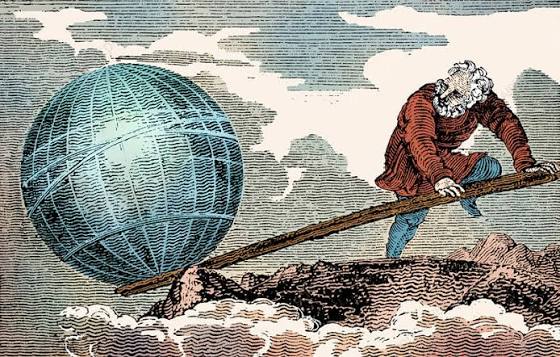
“The Lever” is a nod to Archimedes of Syracuse, credited with developing mathematical proof of the principle of the lever. This act inspired the now famous quote:
“Give me a place to stand, and a lever long enough, and I will move the world”
What we are after here is “leverage”:
• Getting more done with less effort
• Creating repeatable results
• Scaling success without burning out
Strong systems are the tool that will create this leverage.
—
You know about “systems”.
Writing systems. Management systems. Investing systems.
But do you know what a “system” actually is? Its parts? Its purpose? How it is created?
This week we are going back to first principles to set the table for everything that will follow.
Think of your cell phone.
It has a bunch of parts: screen, battery, CPU. All of them are required if it is going to turn on and work.
But that is not all it needs.
For your phone to work it also needs electricity, and reception. Two more systems that act as inputs.
Remove just one part and your phone is no longer a communication device. It becomes a useless piece of plastic. It is the potential of what it can do that defines it.
A “system” then is a collection of relationships and interconnected parts that create a complex whole.
—
When thinking about systems there is a powerful concept that must be understood:
Feedback
Because everything in a system is interconnected, a change in one area will drive a result in another. The system output is fed back in as an input. This is known as a classic feedback loop.
There are two main types of feedback loops:
1. Reinforcing
A Reinforcing feedback loop will encourage more and more of the same.
Positive outputs create even greater positive outputs. Compounding returns from smart investments create a positive feedback loop.
Negative outputs create a downward feedback spiral. Too much junk food in your diet causes weight gain, which reduces motivation and self-image, which causes you to eat more junk food.
Current results reinforce future results.
2. Balancing
The second type of feedback is a Balancing Loop.
This represents a situation with a goal, and an action taken to achieve that goal.
The new goal creates a gap between the current state and desired end state. The action taken must then be large enough to begin closing the gap, causing the current state to eventually rebalance with the desired end state.
A simple example would be the desire to increase sales in your organization by 10%.
This goal creates a gap which would then be closed by taking action; say increased sales calls. The gap will then begin to close until your sales goal is met.
—
How does this apply to YOUR goals?
By understanding the interconnected nature of things, and the systems which you are operating inside of, you will be able to better create systems that result in exponential growth.
Success that builds from success.
And by considering the feedback received you can quickly change and test new inputs until you have created a self-reinforcing positive upwards spiral of success.
This will let you:
• Get more done in less time (productive)
• Create better content, faster (prolific)
• Build and scale a successful business (profitable)
Each of these will be covered in the coming weeks.
—
Takeaway:
• Systems = Interconnected parts that creates the whole
• For every change there will be a reaction
• Outputs return as inputs, creating a feedback loop
• Loops are Reinforcing or Balancing
• Strong systems are the key to success
—
Thanks for reading today.
I’m finalizing my first book right now. Its about the productivity system (the first P!) I’ve developed over a 20 year career at sea as a ship’s Captain, and in business as an executive.
It will be released in January, and for a limited time I am offering a free copy for people who register interest before November 30th (2026 Update: It’s published! Get it here)